
Shoulder Dislocation Treatment in Singapore
Comprehensive care for shoulder dislocation by Dr Chew Chee Ping

Shoulder Dislocation: What It Is and Key Symptoms to Watch For
A shoulder dislocation occurs when the upper arm bone (humerus) is forced out of the shoulder socket. As the shoulder is the body’s most mobile joint, it is also one of the most prone to dislocation.
A dislocated shoulder can damage surrounding structures such as the muscles, ligaments, tendons, cartilage, nerves, and blood vessels. Once a shoulder has been dislocated, there is also a higher risk of future dislocations.
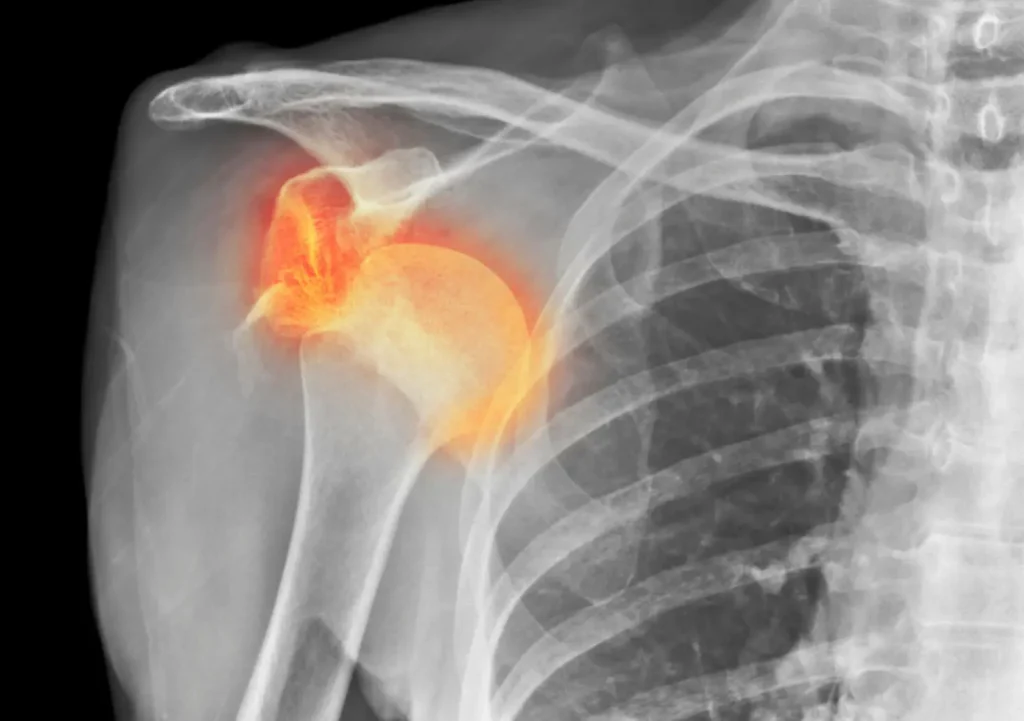
Symptoms of a dislocated shoulder include
- Severe shoulder pain
- Swelling or bruising
- Difficulty or inability to move the shoulder
- A visibly out-of-place shoulder
- Numbness or weakness in the arm or shoulder
Types of shoulder dislocation
Shoulder dislocations are classified by the direction in which the humeral head (the ball of the upper arm bone) moves out of the socket:
- Anterior dislocation occurs when the humeral head shifts forward out of the socket. This is by far the most common type, typically resulting from the arm being forced into extension and external rotation — such as in a fall or contact sport impact.
- Posterior dislocation occurs when the humeral head is displaced backward and above the socket. This is a relatively uncommon type and is most often associated with seizures or electrical shock rather than trauma.
- Inferior dislocation occurs when the humeral head is forced downward out of the socket, toward the armpit. This is the rarest of the three types.
- Shoulder subluxation (partial dislocation) refers to a condition where the humeral head only partially slips out of the socket, rather than fully dislocating. While less severe, it still causes instability and discomfort and should not be ignored.
Common causes of shoulder dislocation
Shoulder dislocation may occur due to:
- Fall onto an outstretched arm
- Contact sports such as rugby, football, or martial arts
- Road traffic accidents
- Workplace injuries
- Sudden twisting injuries
- Previous shoulder instability

Risk factors
Shoulder dislocation most commonly results from a sudden fall or direct blow to the shoulder, often occurring during sports or other physical activities where the joint is subjected to significant force.
Certain factors can increase an individual’s likelihood of experiencing a dislocation:
- Sex and age – Younger individuals and those participating in contact or overhead sports are generally at higher risk of shoulder dislocation.
- Ligamentous laxity -Those with naturally loose ligaments have reduced joint stability, making the shoulder more vulnerable to displacement.
- History of previous dislocation – A prior shoulder dislocation often weakens the surrounding structures, significantly increasing the risk of recurrence.
Diagnosing and treatment options
A shoulder dislocation is typically confirmed through a physical examination, supported by imaging to assess the extent of the injury, including:
- X-rays
- MRI scan
- CT scan
As shoulder dislocation is a medical emergency, prompt treatment is essential. Early reduction — the process of carefully guiding the arm’s bone back into the socket — significantly reduces the risk of cartilage damage and post-traumatic arthritis. During this procedure:
- Sedation and pain relief are administered to ensure comfort
- The doctor carefully guides the arm bone back into the correct position
- A follow-up scan is performed to confirm proper alignment

Recovery for dislocated shoulder
Recovery timelines vary depending on the severity of injury, associated soft tissue damage, and whether surgery is required. Many patients regain function within several weeks, although return to sports may take longer.
During this period, you can expect:
- Wearing a sling or splint for at least a week to support healing
- Regular icing of the affected area to manage swelling
- Light exercises to maintain mobility
- Physical therapy to restore full shoulder function and reduce the risk of recurrence
It is important to consult your doctor before returning to activities that place stress on the shoulder, such as sports, heavy lifting, or overhead reaching.
When Is Surgery Necessary?
Surgery is not always required, particularly for a first-time dislocation treated promptly. However, in cases of recurrent dislocation:
- Further imaging may be needed to assess damage to the labrum, rotator cuff, or surrounding bone structures
- Arthroscopic (keyhole) surgery is the most common surgical approach
- In more severe cases, open reconstruction may be required
Meet Our Doctor
Dr Chew Chee Ping
Senior Consultant Orthopaedic Surgeon
Dr Chew Chee Ping is an orthopaedic surgeon who specializes in shoulder pain and treatment. With extensive experience and a dedication to patient care, Dr Chew works to provide patients with effective and lasting relief from shoulder pain.
Frequently Asked Questions
A shoulder dislocation is a specific event where the upper arm bone completely pops out of the shoulder socket, usually from injury or trauma.
Shoulder instability is a chronic condition where the joint is too loose, causing the shoulder to repeatedly slip in and out of place even during everyday activities.
A dislocation is seen as a one-time event, while instability is an ongoing condition. However, the two are closely linked – a severe dislocation can lead to chronic instability over time.
Once the ligaments, tendons, and muscles surrounding the shoulder become stretched or torn, the joint loses its structural integrity, making repeated dislocations far more likely.
If you find yourself experiencing frequent shoulder dislocations or persistent instability, it is strongly advisable to consult an orthopaedic specialist for a thorough evaluation and a long-term management plan
No, a shoulder dislocation is a medical emergency and should be assessed by a healthcare professional as soon as possible. Attempting to force the shoulder back into place on your own can lead to further injury to the muscles, ligaments, nerves, or blood vessels around the joint.
While waiting for medical attention, keep the arm as still as possible and apply ice to help reduce pain and swelling.
A dislocated shoulder can lead to several complications if not properly treated. These include damage to the surrounding muscles, ligaments and tendons, injury to nearby nerves or blood vessels, and an increased likelihood of the shoulder dislocating again — particularly following a severe initial injury.
A dislocated shoulder is usually treated initially in the emergency department. If there are associated injuries such as fractures, nerve damage, or significant soft tissue damage, further assessment by an orthopaedic surgeon may be required.
Preventive measures include wearing appropriate protective gear during contact sports and maintaining regular exercise to build joint strength and flexibility.
For those with a history of shoulder dislocation, the risk of recurrence is significantly higher. Adhering to a structured rehabilitation programme, including the strength and stability exercises recommended by your doctor is essential in reducing this risk.